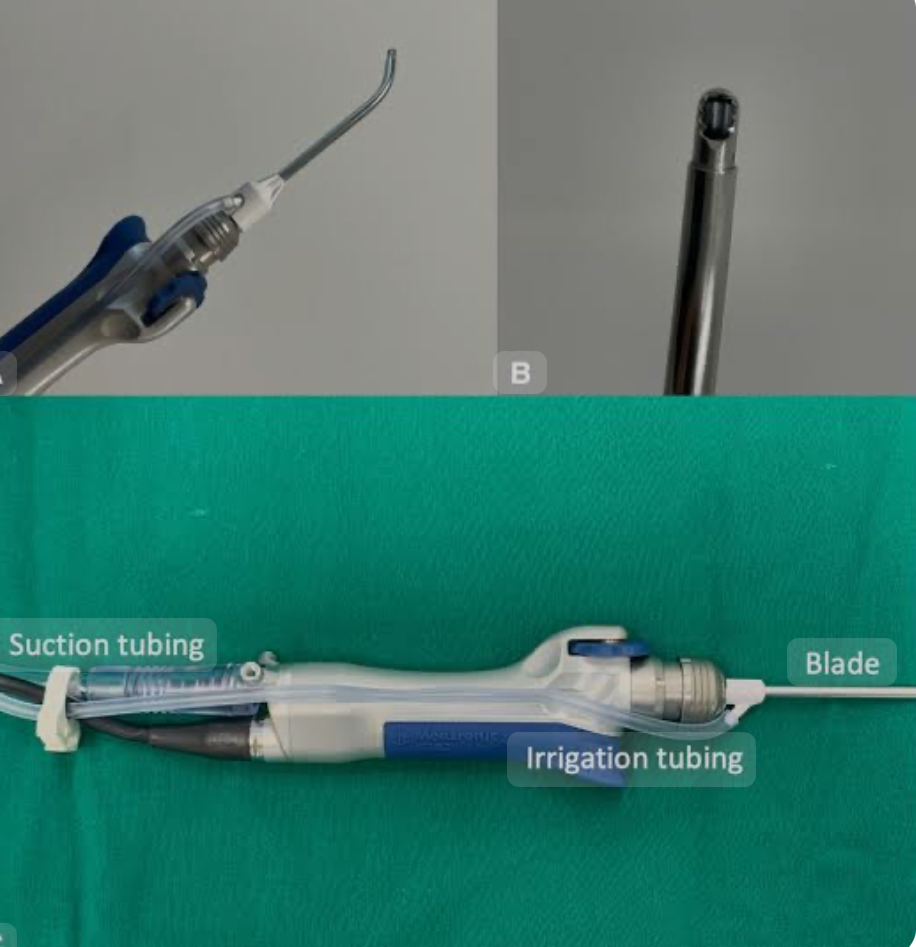
Microdebrider in sinus surgery

In sinus surgery, a microdebrider is a powered, rotary shaving device used for precisely resecting
tissues, minimizing trauma and bleeding, and improving surgical visibility through continuous suction
and irrigation. 

Here's a more detailed explanation:

What is a Microdebrider?

  1. Function:
    A microdebrider is a cylindrical, electrically powered shaver that uses continuous suction to remove
    diseased tissue, such as nasal polyps, during endoscopic sinus surgery (ESS).
  2. Mechanism:
    It precisely resects tissue, minimizing inadvertent mucosal trauma and stripping, which is crucial for
    preserving the natural sinus drainage and preventing excessive scarring.

  3. Advantages:
     Precision: Allows for precise tissue removal, leading to less damage to surrounding
    structures.
     
     Reduced bleeding: The continuous suction and irrigation help to clear the surgical
    field and minimize blood loss. 

     Improved visibility: Clear surgical field allows for better visualization and precision
    during surgery.
     
     Faster healing: Minimally invasive nature can lead to faster healing and reduced
    scarring.
  4. Components:

    The microdebrider consists of a console, a handpiece, and a blade or bit. 

     Console: Controls the handpiece, setting speed, and direction of rotation of the
    blade or bit. 
     Handpiece: The device that is used to remove tissue. 
     Blade or bit: The disposable blade is a hollow metal tube coupled to suction that
    cuts obstructing tissue and simultaneously removes it from the airway.
How it’s Used in Sinus Surgery:

  1. Endoscopic Sinus Surgery (ESS):
    Microdebriders are commonly used during ESS procedures, which are minimally invasive surgeries
    performed through the nasal passages to address conditions like chronic sinusitis and nasal
    polyposis. 
  2. Polypectomy:
    Microdebriders are particularly effective in removing nasal polyps, a common cause of nasal
    obstruction. 
  3. Other uses:
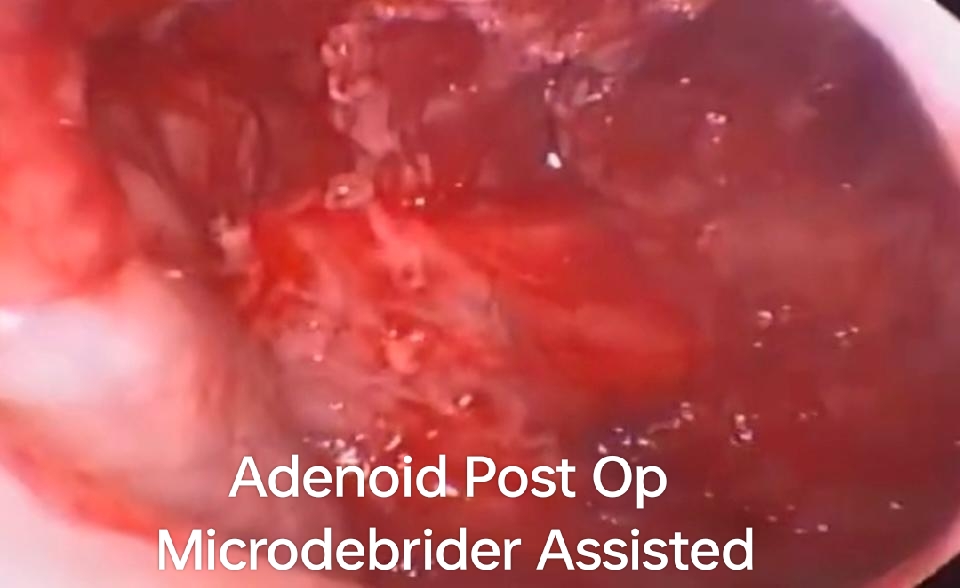
    The microdebrider's otolaryngologic implications extend to tonsillectomy and adenoidectomy along
    with laryngeal surgery in order to remove nodules or lesions. 
    Potential Complications and Considerations:
  4. Device Failure:
    While rare, device failures can occur, potentially leading to overheating, device separation, or other
    issues. 
  5. Surgeon Error:
    Some complications can be attributed to surgeon error, such as accidental injury to the anterior
    ethmoid artery or burn injury to the patient's nostril or lip. 
  6. Training and Experience:
    Proper training and experience are crucial for safe and effective use of the microdebrider.
  7. Maintenance:
    Regular and meticulous device checks are important to prevent serious complications.
  8. Tactile Feedback:
    The tactile feedback component is markedly diminished especially during soft tissue removal.
  9. Recent Innovations:
    The most recent innovation in microdebrider technology now permits the added ability to control
    bleeding while retaining the shaving and suctioning capabilities characteristic of this class of
    instrument.

Book An Appointment

Contact Form